
Emergency Local Plumbers in Youngstown, OH and nearby cities
Emergency Local Plumbers in Youngstown, OH and nearby cities
Tankless water heaters have been around long enough that the technology is proven, but 2026 is shaping up to be the year more homeowners are finally making the move. At Mr. Rooter Plumbing, we've seen the conversation shift from curiosity to serious consideration as energy costs climb and traditional tank units age out. If you've been on the fence about whether a tankless system makes sense for your home, this breaks down what's driving the switch and what you need to know before making that call.
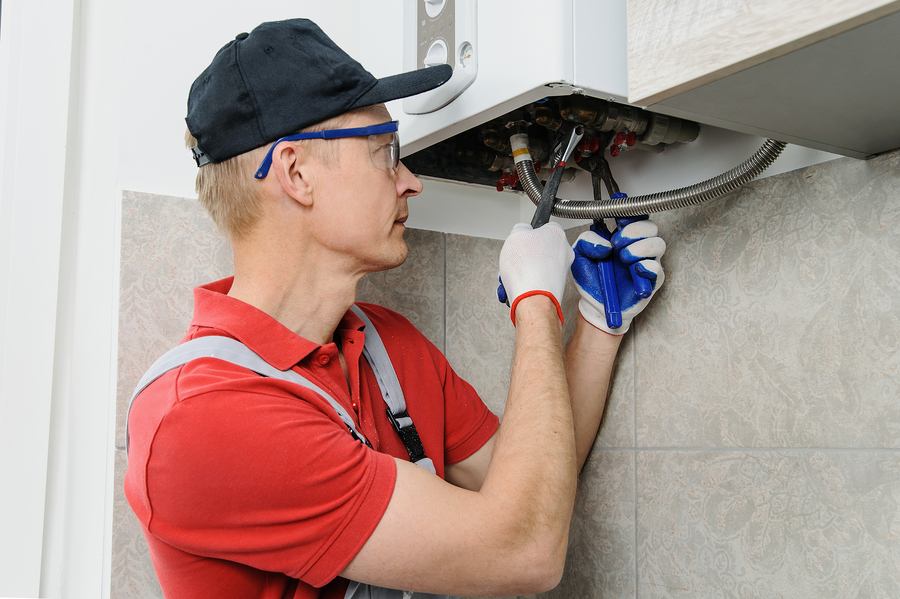
A traditional tank heater keeps 40 to 80 gallons of water heated around the clock, whether you use it or not. A tankless unit skips the storage completely. Cold water flows through the unit, then a gas burner or electric element fires up, and hot water reaches your tap within seconds. When you turn off the tap, the heating stops.
The on-demand design is what changes the math on energy use. There's no standby heat loss, which is the energy a tank unit burns just to keep stored water at the right temperature. Households using less than 41 gallons of hot water every day could see energy savings of over 20 percent with a tankless system compared to a conventional tank.
The units are compact. Most wall-mounted models take up about the same space as a carry-on suitcase, which frees up square footage in utility closets, basements, and garages. For homes with tight mechanical spaces, that physical difference alone can make tankless water heaters worth the switch.
The price difference between running a tank and running a tankless unit shows up on your utility bill every month. Gas-powered tankless systems normally run at 80 to 99 percent thermal efficiency. Most standard gas storage tanks have a capacity of between 60 and 70 percent. The gap compounds as time goes on, especially as natural gas and electricity rates have continued to rise.
For homes with higher hot water needs, the DOE estimates 8 to 14 percent savings for households using roughly 86 gallons per day. If you're already spending $50 or more per month heating water, the reduction adds up across a unit's lifespan.
Federal tax credits have also made the upfront cost easier to absorb. The Inflation Reduction Act extended a 30 percent tax credit for qualifying energy-efficient home upgrades, including certain tankless water heaters, through 2032. A trusted plumber can help you confirm if a specific model qualifies before purchase.
One concern homeowners bring up is whether a single tankless unit can keep up when multiple fixtures run at the same time. A tankless unit has a flow rate measured in gallons per minute, and if demand exceeds that rate, water temperature can drop.
Most whole-home gas tankless units deliver between 7 and 12 GPM, which covers simultaneous use in most households. Running a shower, washing machine, and dishwasher at the same time usually draws around 5 to 7 GPM total, depending on your fixtures. A properly sized unit can handle that without issue. Sizing is where working with a qualified plumber matters, because undersizing a unit creates performance problems.
In larger homes or properties with high simultaneous demand, two tankless units installed in parallel solve the capacity problem. Some homeowners also add a small point-of-use tankless unit under a kitchen sink or in a master bath to reduce the wait time for hot water at fixtures that are far from the main unit.
Tankless water heaters aren't the right fit for every situation, and the upfront cost is the most common reason homeowners pause. A quality whole-home unit runs between $800 and $1,500 for the equipment, and installation adds to that depending on whether your home needs gas line upgrades, new venting, or electrical panel work. A plumber in Sharpsville, PA can walk through your existing setup and give you a clear idea of what the full project involves.
Homes with older gas lines may need those lines upsized to supply the higher BTU demand a tankless unit requires. Electric tankless systems usually require a dedicated circuit and, in some cases, a panel upgrade. These aren't dealbreakers, but they're costs to factor in alongside the unit price.
Water quality also affects performance. Hard water causes mineral buildup inside a tankless unit's heat exchanger, which reduces efficiency and can shorten the unit's life if left neglected. Homes in areas with hard water should install a water softener or commit to an annual descaling routine to protect the investment.
A tankless unit requires some scheduled upkeep, but the tasks are specific and manageable. Annual descaling flushes mineral deposits from the heat exchanger and keeps the unit running at rated efficiency.

The inlet filter screens on a tankless unit should be checked and cleaned once a year. If your unit has a condensate drain, the line needs to stay clear to prevent backup.
A standard tank unit lasts 8 to 12 years. A well-maintained tankless system lasts 20 years or more. A plumbing repair service that handles annual maintenance on a tankless unit can catch minor issues, like a failing igniter or a loose connection, before they turn into a cold shower on a winter morning.
Tankless water heaters offer a lot of benefits, including lower energy costs, longer equipment life, and hot water that doesn't run out. The decision comes down to your household's demand and whether the upfront investment fits your budget. Mr. Rooter Plumbing provides the full process, from evaluating your current setup to sizing the right unit and completing the installation. Contact us today to schedule an appointment for your hot water heater upgrade or plumbing repair service.
A quick glance at the Grand Canyon can show you the power and potential of a steady flow of water. Water leaks in your property can result in water damage that can devastate the walls, ceilings, and even the foundation of your building.…
Are you a Youngstown resident renovating your house or business to add a new bathroom or perhaps a refrigerator in your basement? A water line installation will be one of the most important parts of the project, so be sure to vet your…